Mark one mat-sized training zone
Do firstA visible zone prevents the small-space setup from turning into a moving-furniture routine.
Small-space setup checklist
The best compact setup is not the one with the most equipment. It is the setup that gives you a clear training zone, quick start time, quiet options, and storage that does not take over the room.
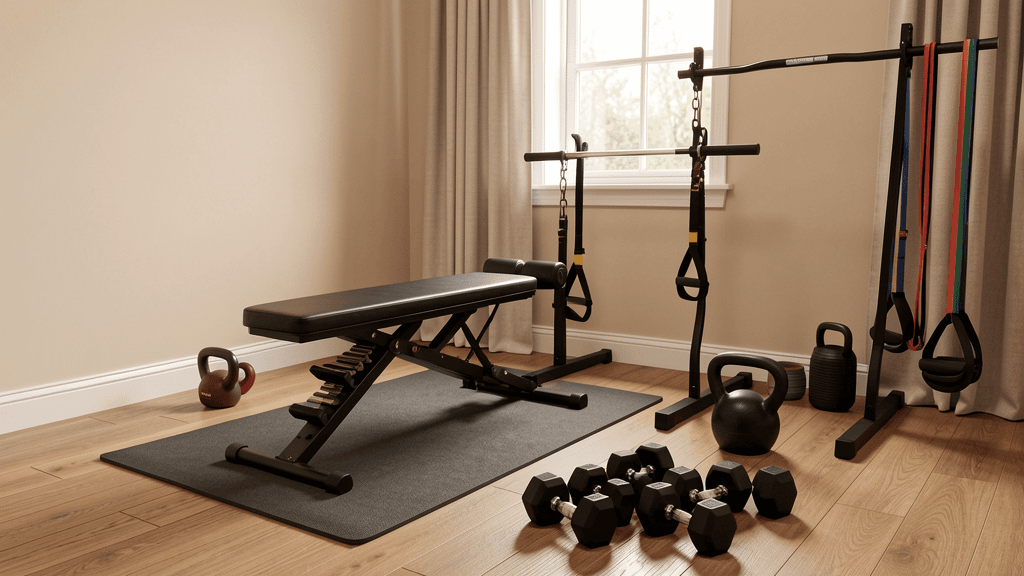
If the workout zone is blocked, more gear will not fix consistency.
Interactive setup builder
This turns the checklist into a working report: choose your room, noise limit, current gear, target program, goal, and buying posture. The output changes immediately and can be saved in this browser, copied, downloaded, or opened as an email draft.
Your setup report
Next action: Bands or light dumbbells
Program path
A free-calendar setup should stay low-friction: choose the week first, then buy only the equipment the plan repeats.
Open next stepA visible zone prevents the small-space setup from turning into a moving-furniture routine.
Floor protection and controlled tempo matter more than adding a noisy cardio tool.
Low-friction resistance is enough until the weekly plan proves consistent.
If the room cannot handle noise, a loud tool becomes clutter instead of a habit builder.
Big equipment should wait until space, storage, and a repeatable schedule are proven.
General fitness planning only. This is not medical advice, a product ranking, or a claim that any equipment will produce a specific result.
Pick the mat-sized area where you can squat, hinge, lunge, press, and stretch without moving furniture every session.
Start with equipment your plan uses weekly: a mat, adjustable dumbbells or bands, and a stable bench only if the room can store it cleanly.
Use controlled tempo, floor protection, and low-impact conditioning when noise matters. Avoid turning every session into jumps and drops.
Vertical storage beats scattered gear. If setup takes too long, the plan becomes easier to skip.
Buy in this order
Define the workout zone and make floor work more repeatable.
Cover strength basics before buying single-purpose accessories.
Add only if your program uses it often and it has a storage home.
Walking pad, bike, step, or quiet circuits should match your noise and storage limits.